
How Comic Collections Are Valued in Real Life
If you’ve ever typed “how are comic collections appraised?” into Google, you probably noticed something odd.
Every website gives you half the answer.
They’ll say things like “condition matters” and “first appearances are valuable”… but they never explain how real comic buyers actually put a number on your collection when money is on the table.
So today, we’re pulling the curtain back.
This is the real-world, dealer-level breakdown of how comic collections are valued - the same process we use every day at Fantasy Road Comics when people sell collections ranging from £100 bundles to six-figure Silver Age hoards.
Let’s get into it.
1. Condition: The Single Biggest Price Multiplier
In the modern age, condition is not just important. It’s everything.
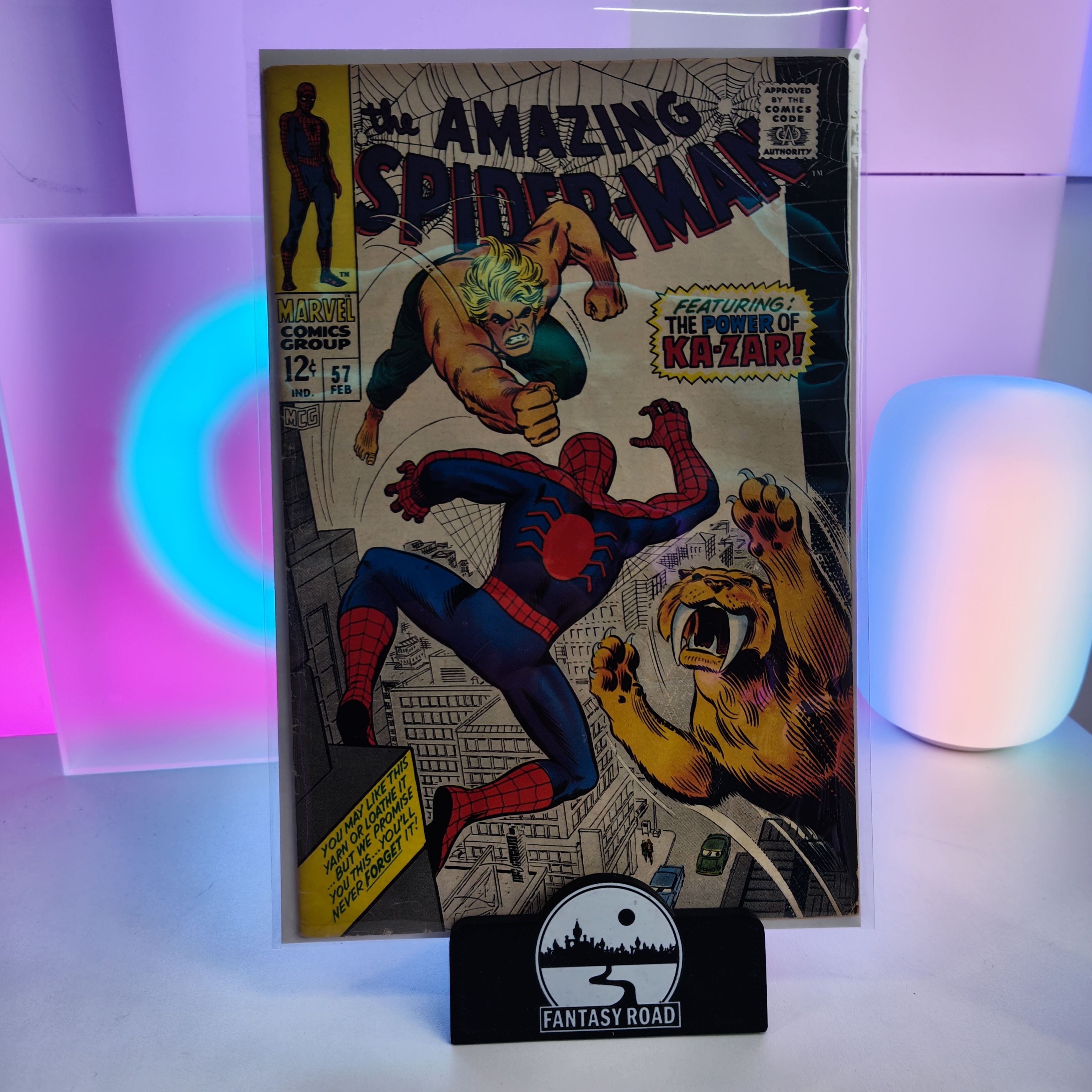
For example, condition affects comic books SO much, that two copies of the same comic can be worth £10 and £10,000 depending on how beat up it is.
When buyers appraise collections, they don’t just look at what you have... They look at what that lot can be. They look at how clean, sharp, and intact each book is, how it would grade, and how rare that book is in that condition.
Here’s what professionals look for:
Key condition factors
-
Spine ticks
-
Corner blunting
-
Creases or folds
-
Colour rub
-
Tears
-
Staples (rusted, detached, missing)
-
Pages (white, off-white, tan, brittle)
-
Writing, stamps, or cut-outs
A Near Mint comic (9.4–9.8) can be worth 10–30x more than the same book in mid-grade.
That’s why appraisers spend more time looking at condition than anything else.
2. Rarity: Not “Old”, but “Hard to Find”
One of the biggest myths in comics:
“It’s from the 1960s, so it must be rare.”
Not necessarily.
Millions of comics were printed in the Silver Age.
But how many survived in nice condition?
Rarity comes from:
-
Low print runs
-
High destruction rates
-
Low survival in high grade
That’s why a 1990s variant can be rarer than a 1960s Marvel book.
When buyers appraise collections, they look for:
-
Key issues with low surviving population
-
Books that rarely appear on the market
-
Comics that are difficult to replace
True rarity creates price stability and upward pressure.
3. Completeness: Runs Matter More Than Random Keys
One Amazing Spider-Man #129 is valuable.
But a complete ASM run from #1 to #300 is worth significantly more per book.
Why?
Because collectors buy stories, eras, and libraries, not just random issues.
Complete or near-complete runs:
-
Sell faster
-
Attract higher-end buyers
-
Reduce seller risk
-
Increase liquidity
When we value collections, we pay close attention to:
-
Unbroken series runs
-
Early-to-late era coverage
-
Missing key gaps
A tidy collection often beats a messy one with the same books.
4. Demand: What People Are Actually Buying Right Now
Demand is the silent multiplier.
It’s what turns a £200 comic into a £2,000 one.
Demand comes from:
-
Movies & TV shows
-
New characters
-
Speculator interest
-
Nostalgia cycles
-
Influencer hype
-
Reprint exposure
Appraisers track:
-
eBay sold listings
-
Auction house results
-
Dealer network prices
-
Convention sales
-
Private collector demand
This is why pricing from a 10-year-old guidebook is useless. In fact, as volatile as the market currently is, there are no printed examples for pricing comic books that are longer relevant. Even the onloine valuation tools seem to be wildly off!
Real buyers use live market data.
5. Historical Context: Why Some Comics Will Always Matter
Some comics transcend hype.
They’re historically important:
-
First superheroes
-
Industry milestones
-
Cultural icons
-
Creator-owned breakthroughs
These books:
-
Hold value through market cycles
-
Attract institutional collectors
-
Are aggressively chased
Examples:
-
Action Comics #1
-
Amazing Fantasy #15
-
Fantastic Four #1
-
Detective Comics #27
When a collection contains historically important material, it changes the entire valuation model.
How Professionals Actually Appraise a Collection
Here’s the real-world process:
-
Identify key issues
-
Assess condition
-
Group by runs and eras
-
Apply current market demand
-
Factor rarity and replacement difficulty
-
Adjust for completeness and presentation
-
Calculate resale margins
-
Produce a buy-price
This is why two collections with “the same comics” can have wildly different offers.
Why Online Price Guides Get It Wrong
Price guides:
-
Don’t adjust for condition properly
-
Lag behind the market
-
Ignore demand spikes
-
Don’t account for grading spreads
- Ignore complete sets, titles or story arcs
- Often inflated to attract people to download their app, or register on their platform
They’re reference tools - not buying tools.
Real valuation is based on what people are paying this week.
Why Selling Individually Is Not Always Better
Yes, selling single comics can bring higher top prices.
But:
-
It takes months
-
Fees eat profit
-
Condition risk increases
-
Returns and fraud happen
-
Burnout is real
That’s why many collectors choose bulk sale or consignment instead. A common trap we see, is people coming to us with massive collections, but every single one of the comic books of value are missing. Comic books as bulk hold very little value, it's the few random issues in your lot that will make up 80% of the value. The rest, can be near worthless. When these lots come to us, we have to refuse to offer. Why? Because the value is gone. We hear 'Tried selling on eBay, it was too hard' or 'took them to the car boot' all the time in these situations. The result is always the same. Someone with knowledge has trawled through your lot, and taken anything worth anything, and left you with the unsellable bulk. Comic book shops like us, take on that bulk, as part of the deal of paying for the value.
The Hassle-Free Way to Sell
At Fantasy Road Comics, we do this for you.
We:
-
Appraise your collection
-
Handle grading, selling, or buying
-
Remove the stress
-
Maximise real-world value
If you’re ready to get a professional valuation, head here
No spreadsheets. No guesswork. No wasted months.
Just real-world comic book valuation, done properly.

Comments
You need an account to join the conversation.
Log in Create account